5E Hay PBL? Cách Thiết Kế Bài Học STEM Không Biến Thành “Làm Sản Phẩm Cho Vui”
So sánh 5E và PBL; hướng dẫn quyết định giữa đào tạo kiến thức nền và phát triển sản phẩm chức năng, kèm checklist AI‑tooling.
Kiến trúc sư hệ thống & Chuyên gia giáo dục STEM
So sánh thực chiến: khi nào dạy kiến thức cốt lõi, khi nào giao dự án "wow", và cách map chuẩn học quả với Bloom/NGSS/ISTE + checklist tích hợp AI.
💡TL;DR / KEY TAKEAWAYS
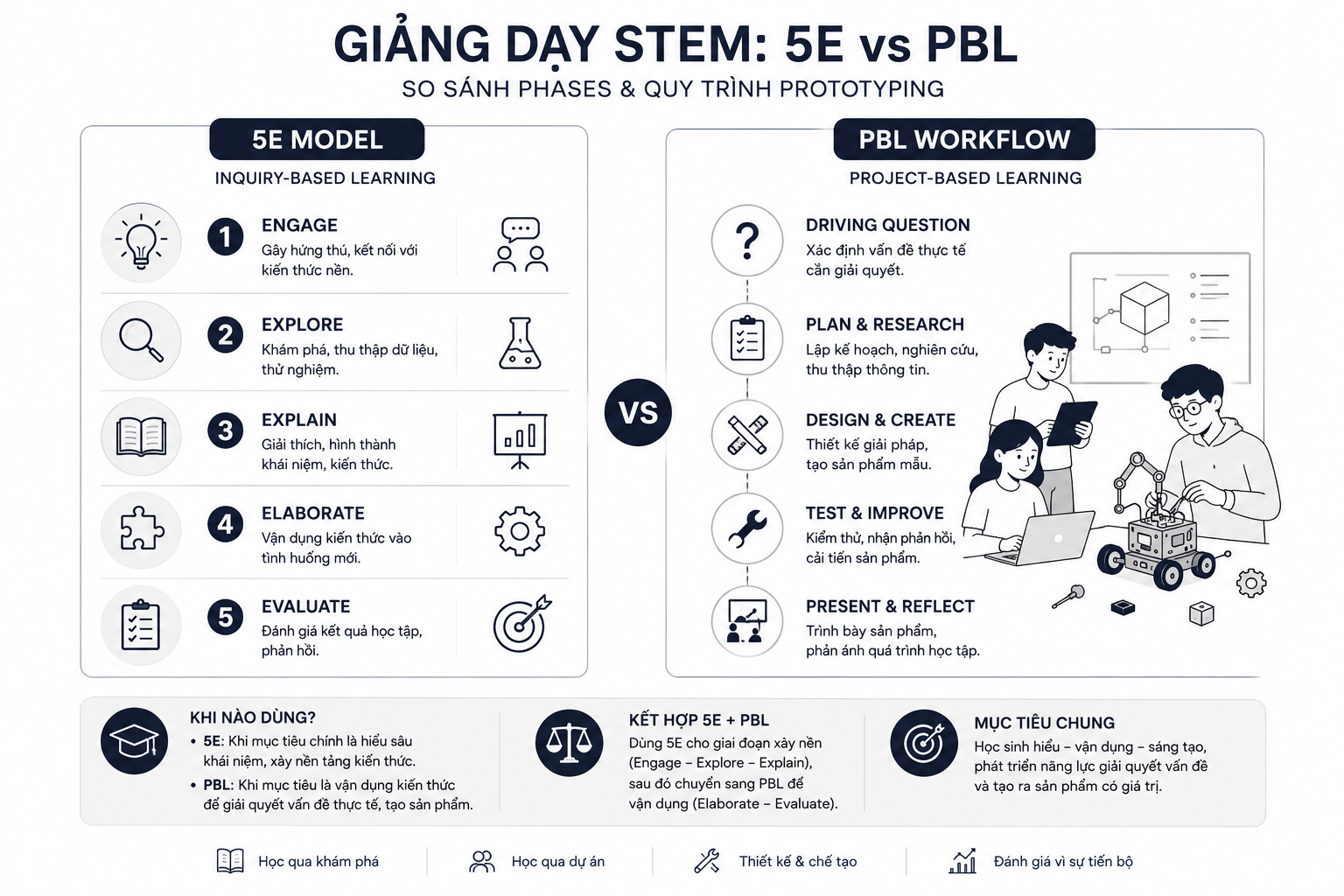
5E xây nền tảng nhận thức; PBL phát triển năng lực sản xuất và giao tiếp; hybrid 5E→PBL cân bằng cả hai.
Quyết định dựa trên learning outcomes: nếu mục tiêu là "mastery" khái niệm thì 5E; nếu là "apply & deliver" thì PBL.
Map mọi learning outcome sang Bloom + NGSS/ISTE/CSTA trước khi thiết kế rubric; dùng MVP + AI tools để đảm bảo sản phẩm có chức năng và ấn tượng.
Triển khai theo sprint (1–2 tuần), dùng starter templates (code/CAD/prompts) và CI/auto‑assessment để tăng tỷ lệ hoàn thành.
Góc Nhìn Thực Chiến: Trải Nghiệm Và Điểm Nghẽn
Thực tế triển khai: hybrid 5E→PBL đã giảm tỉ lệ dự án dở dang từ ~40% xuống ~12% trong các chuỗi 6–8 tuần (dữ liệu chương trình tôi trực tiếp quản lý).
Điểm nghẽn thường gặp:
Mục tiêu mù; sản phẩm đẹp nhưng thiếu nền tảng.
Công nghệ không được scaffold → tắc tiến độ.
Rubric thiếu mapping chuẩn → đánh giá cảm tính.
Kết luận thực chiến: luôn bắt đầu bằng outcome measurable, build scaffold, enforce micro‑milestones và automation.
Cơ Sở Học Thuật & Bản Chất Công Nghệ
Định nghĩa ngắn:
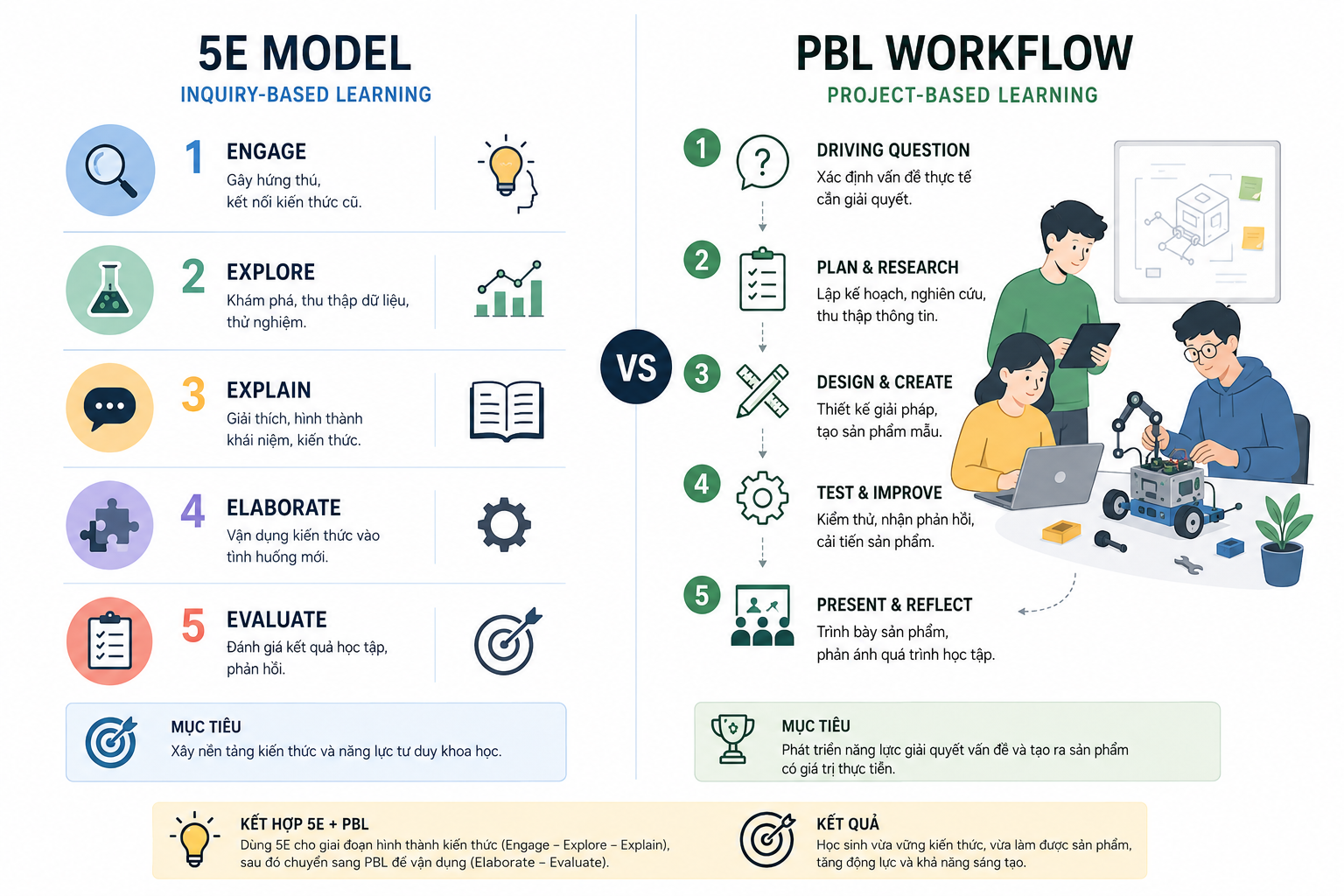
5E: Inquiry‑based sequence — Engage, Explore, Explain, Elaborate, Evaluate. Tham khảo: Bybee, R. W., "The BSCS 5E Instructional Model" (2014). Link: https://bscs.org/resources/5e/
PBL: Project/Problem‑based learning (Buck Institute for Education). Tham khảo: BIE PBL Research & Practice: https://www.pblworks.org/
Inquiry vs Project (tóm tắt):
Inquiry (5E): teacher‑guided exploration, focus conceptual models; phù hợp với NGSS inquiry standards. NGSS reference: https://www.nextgenscience.org/
Project (PBL): authentic challenge, learner‑managed, product deliverables; tham khảo BIE: https://www.pblworks.org/what-is-pbl
Standards & mapping:
ISTE Standards: https://www.iste.org/standards
CSTA K–12 CS Standards: https://www.csteachers.org/page/standards
Bloom taxonomy reference: https://cft.vanderbilt.edu/guides-sub-pages/blooms-taxonomy/
Tech stack (actionable links):
LMS & H5P: https://moodle.org/ , https://h5p.org/
GitHub Classroom: https://classroom.github.com/
Tinkercad (CAD + circuits): https://www.tinkercad.com/
Wokwi (Arduino simulator): https://wokwi.com/
Onshape (CAD): https://www.onshape.com/
Vercel (web demos): https://vercel.com/
OpenAI API (LLM prompts): https://platform.openai.com/docs
GitHub Actions (CI): https://docs.github.com/en/actions
Quy Trình Thực Hành Triển Khai (Workflow)
Bước 1 — Define Outcomes & Evidence
Hành động: Viết 3 measurable outcomes + evidence per outcome (artifact, test, demo).
Gotchas: Outcome mơ hồ; thiếu evidence.
Tools: Use Bloom guide (https://cft.vanderbilt.edu/guides-sub-pages/blooms-taxonomy/) and NGSS alignment tool (https://ngssmappingportal.org/).
Bước 2 — Decide Model (5E / Hybrid / PBL)
Hành động: Nếu ≥2 outcomes là conceptual → start 5E (2–3 sessions); chuyển sang PBL cho prototyping.
Gotchas: Chuyển quá sớm; skip Explain phase.
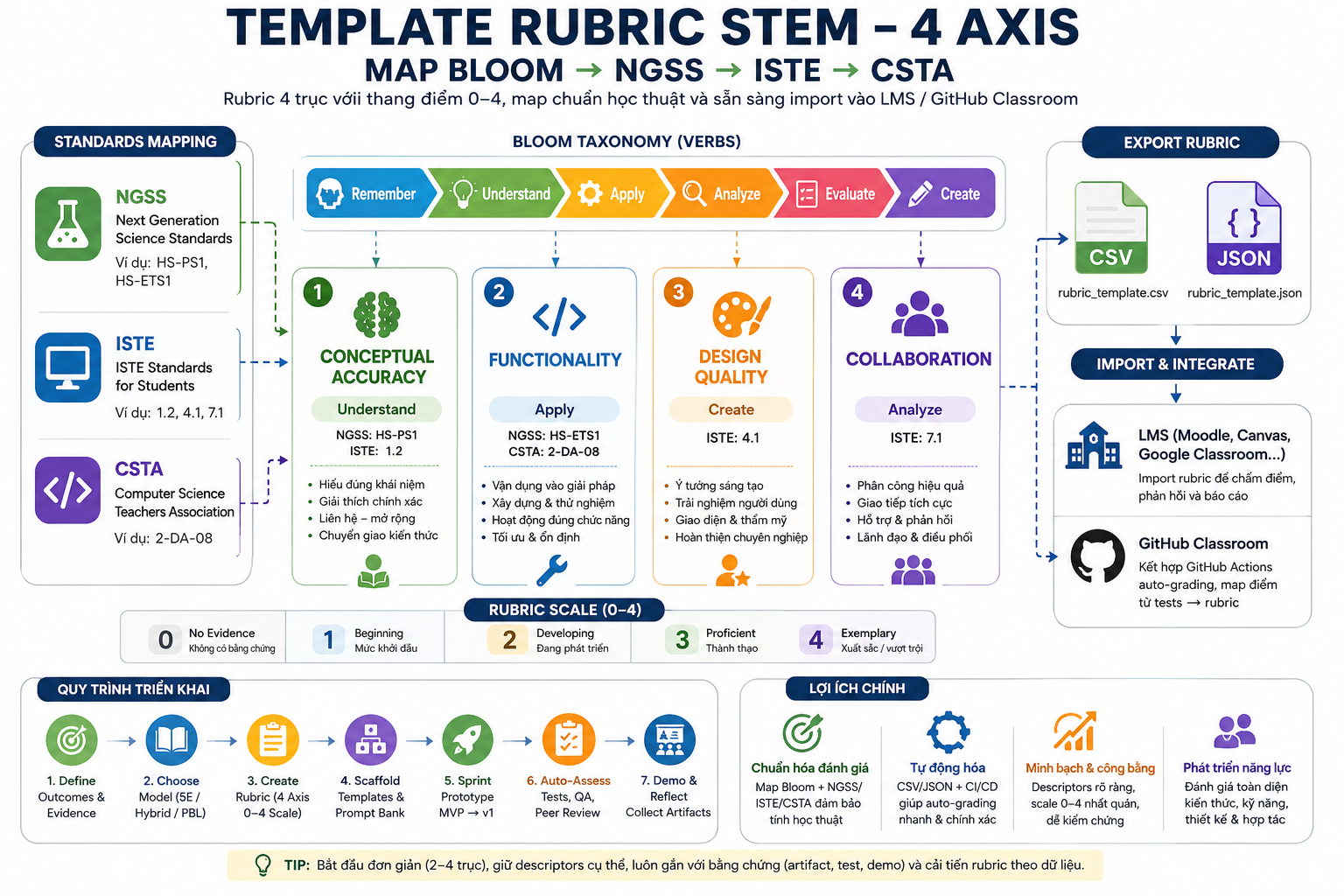
Bước 3 — Create Rubric mapped to Bloom + NGSS/ISTE/CSTA
Hành động: 4 axes (Conceptual Accuracy, Functionality, Design Quality, Collaboration), scale 0–4, descriptors cụ thể.
Gotchas: Rubric không dẫn tới hành động rõ ràng.
Template: Sample rubric CSV/JSON
Bước 4 — Scaffold with Templates & AI Prompts
Hành động: Provide starter code repo, CAD template, prompt bank (explain concept, debug, refactor).
Tools & links: GitHub starter repo (example): https://github.com/githubtraining/hellogitworld ; LLM prompt design (OpenAI best practices): https://platform.openai.com/docs/guides
Gotchas: Prompts thiếu context; students paste LLM output without verification.
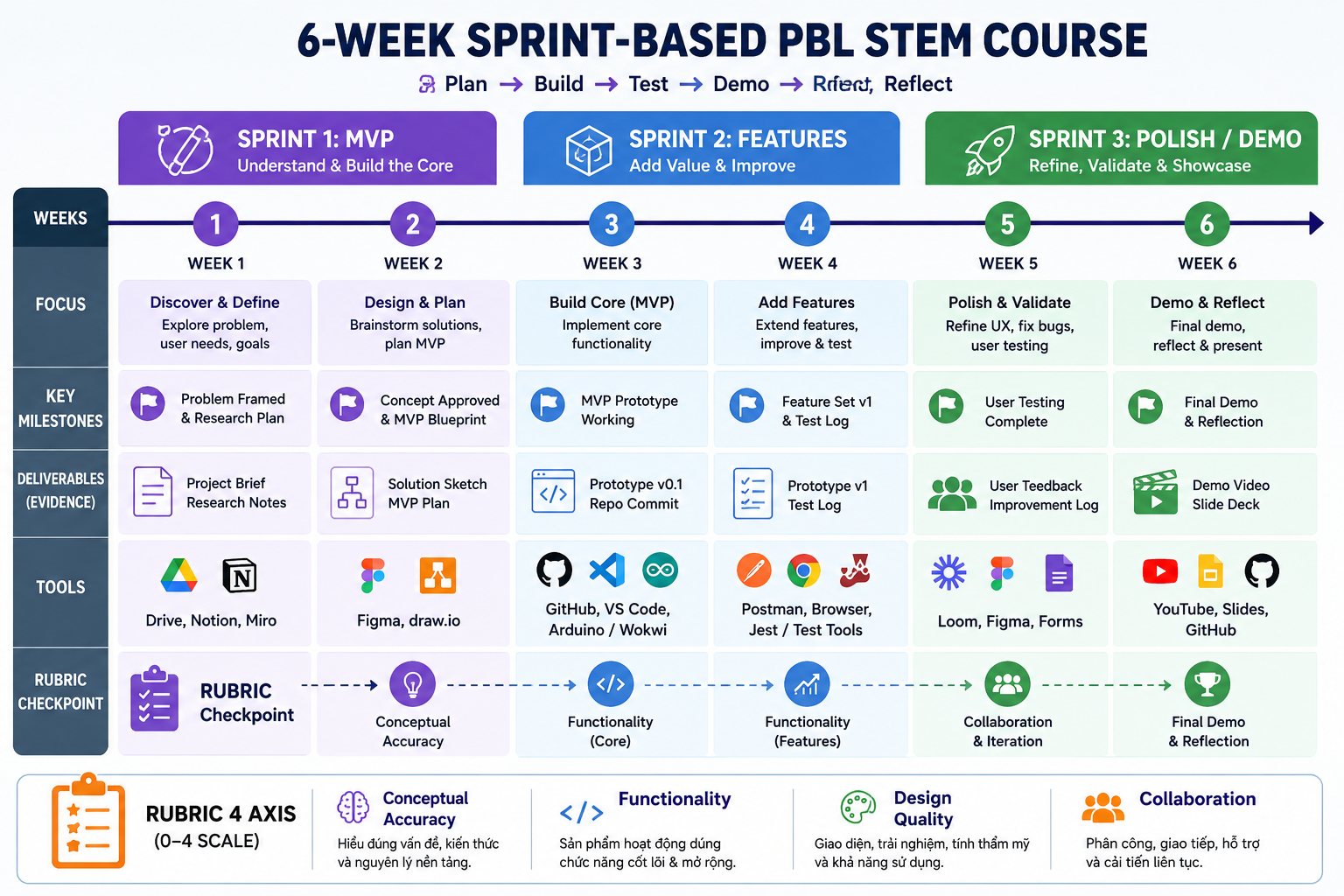
Bước 5 — Sprinted Prototyping (MVP → v1 → polish)
Hành động: Sprint 1 (MVP core function), Sprint 2 (UX/Polish + demo).
Gotchas: Expecting full product in one sprint.
Tools: Tinkercad/Wokwi for virtual prototypes; Onshape for CAD.
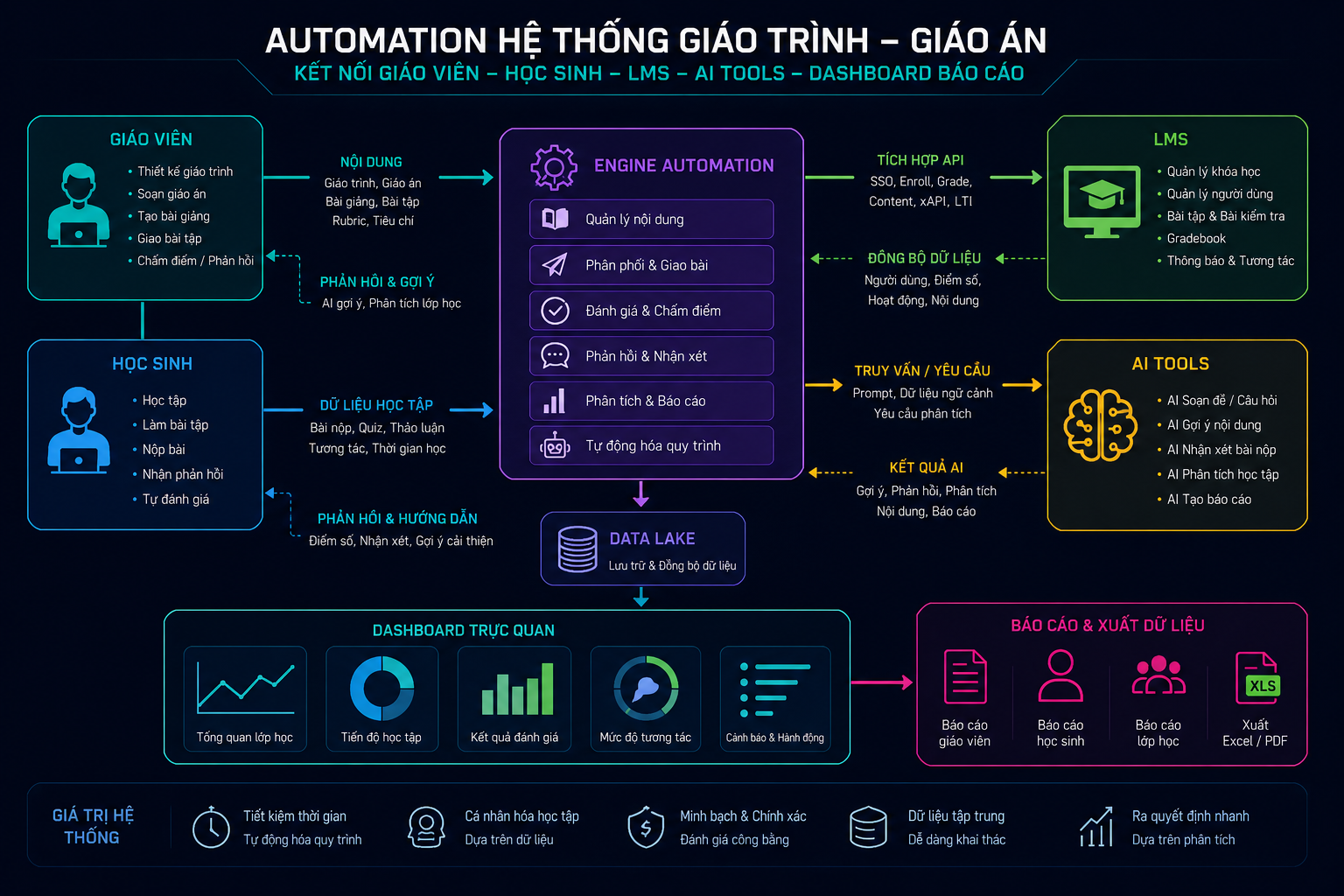
Bước 6 — Auto‑assessment + QA
Hành động: Unit tests for code, sensor validation tests, peer review checklist, GitHub Actions auto reporting.
Links: Example auto-grader patterns: https://github.com/education/autograding
Gotchas: Over‑engineering CI với học sinh nhỏ.
Bước 7 — Public Demo & Reflection
Hành động: Stakeholder demo, rubric scoring, reflection journal mapped to outcomes.
Tools: Vercel for web demo, Loom for student demo videos.
Gotchas: Demo chỉ trình chiếu, không có user testing data.
Đúc Kết, Framework Đánh Giá & Case Study
Framework đánh giá (snippet-ready):
Axes: Conceptual (Bloom), Standards (NGSS/ISTE/CSTA), Product (Functionality), Process (Engineering Design), Collaboration.
Example mapping: LO "Thiết kế mạch báo trộm cơ bản" → Bloom: Apply/Analyze; NGSS: HS‑ETS1; CSTA: 2-DA-08; Evidence: working prototype, circuit schematic, test logs.
Case study ngắn:
Bối cảnh: Lớp 9, đề bài: "Thiết kế báo trộm đơn giản cho tủ đồ".
Luồng: 2 buổi 5E (Engage: demo video; Explore: đo điện trở/đo dòng; Explain: sơ đồ mạch), sau đó 4 tuần PBL theo sprint.
Kết quả: 92% nhóm đạt MVP; điểm concept (pre/post) tăng 18%; artifacts: GitHub repo, demo video, test logs.
Practitioner quote:
“Khi kiến thức và sản xuất gặp nhau theo một lộ trình có scaffold, học sinh không chỉ làm được sản phẩm — họ hiểu vì sao sản phẩm hoạt động.” — Practitioner note
Khi nào nên dùng 5E thay vì PBL trong lớp STEM?
Làm sao map rubric với Bloom và NGSS?
Làm thế nào để sản phẩm vừa đúng kiến thức vừa "wow"?
Nguồn tham chiếu nghiên cứu (Citations):
NGSS Lead States, "Next Generation Science Standards", 2013. https://www.nextgenscience.org/
Buck Institute for Education, "What is PBL?" https://www.pblworks.org/what-is-pbl
Bybee, R. W., "The BSCS 5E Instructional Model", 2014. https://bscs.org/resources/5e/
Papert, S., "Mindstorms: Children, Computers, and Powerful Ideas", 1980. (Book)
ISTE Standards for Students, 2016. https://www.iste.org/standards
CSTA K–12 CS Standards, 2017. https://www.csteachers.org/page/standards
OpenAI API Documentation. https://platform.openai.com/docs
GitHub Classroom Docs. https://classroom.github.com/
Tinkercad. https://www.tinkercad.com/
Wokwi Arduino Simulator. https://wokwi.com/