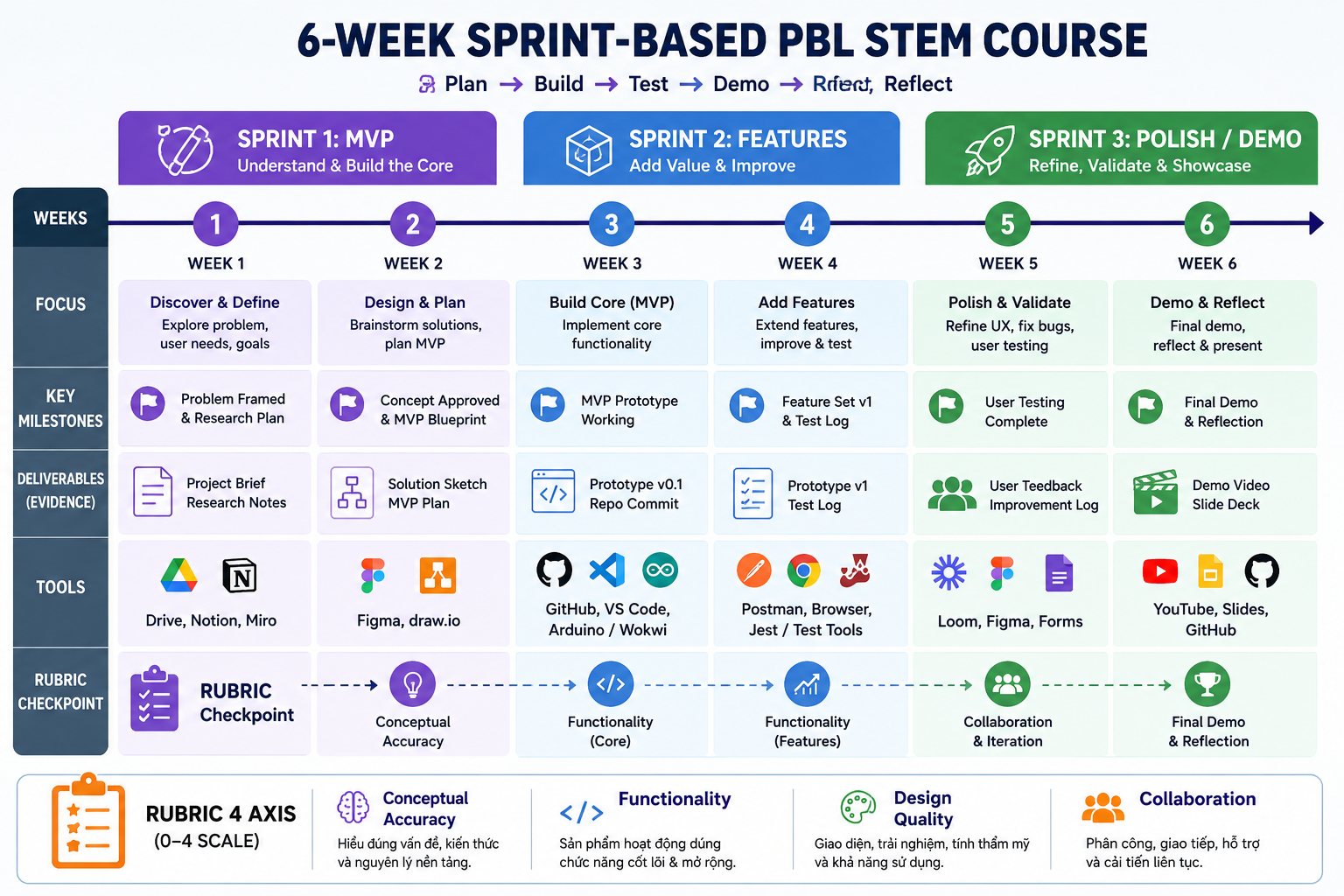
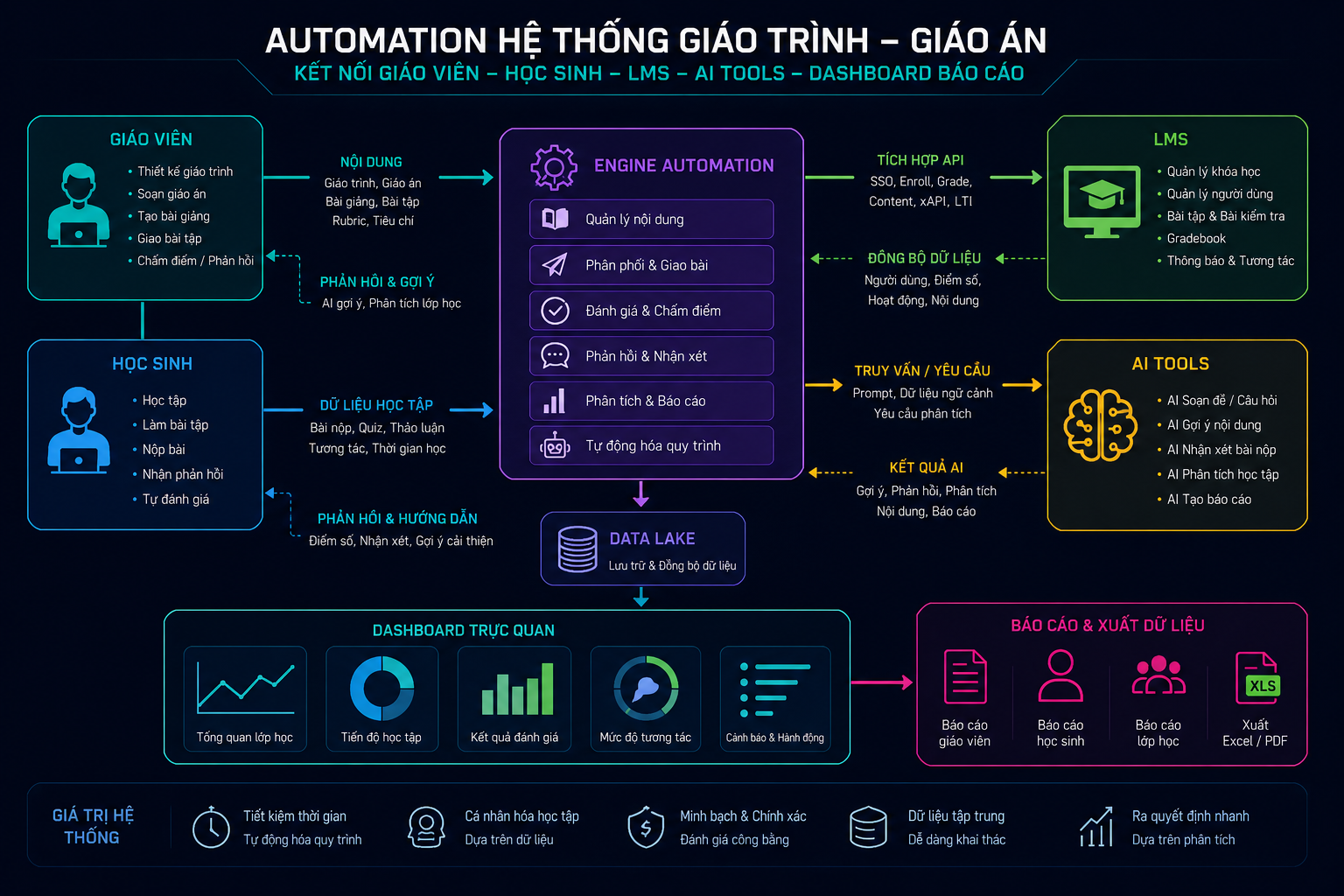
Template Rubric STEM: Map Bloom → NGSS → ISTE → CSTA (CSV/JSON tải về)
Bộ rubric 4 trục (Conceptual, Functionality, Design, Collaboration) đã map sang Bloom + NGSS/ISTE/CSTA; file CSV/JSON và hướng dẫn import để tự động hóa đánh giá.
Kiến trúc sư hệ thống & Chuyên gia giáo dục STEM
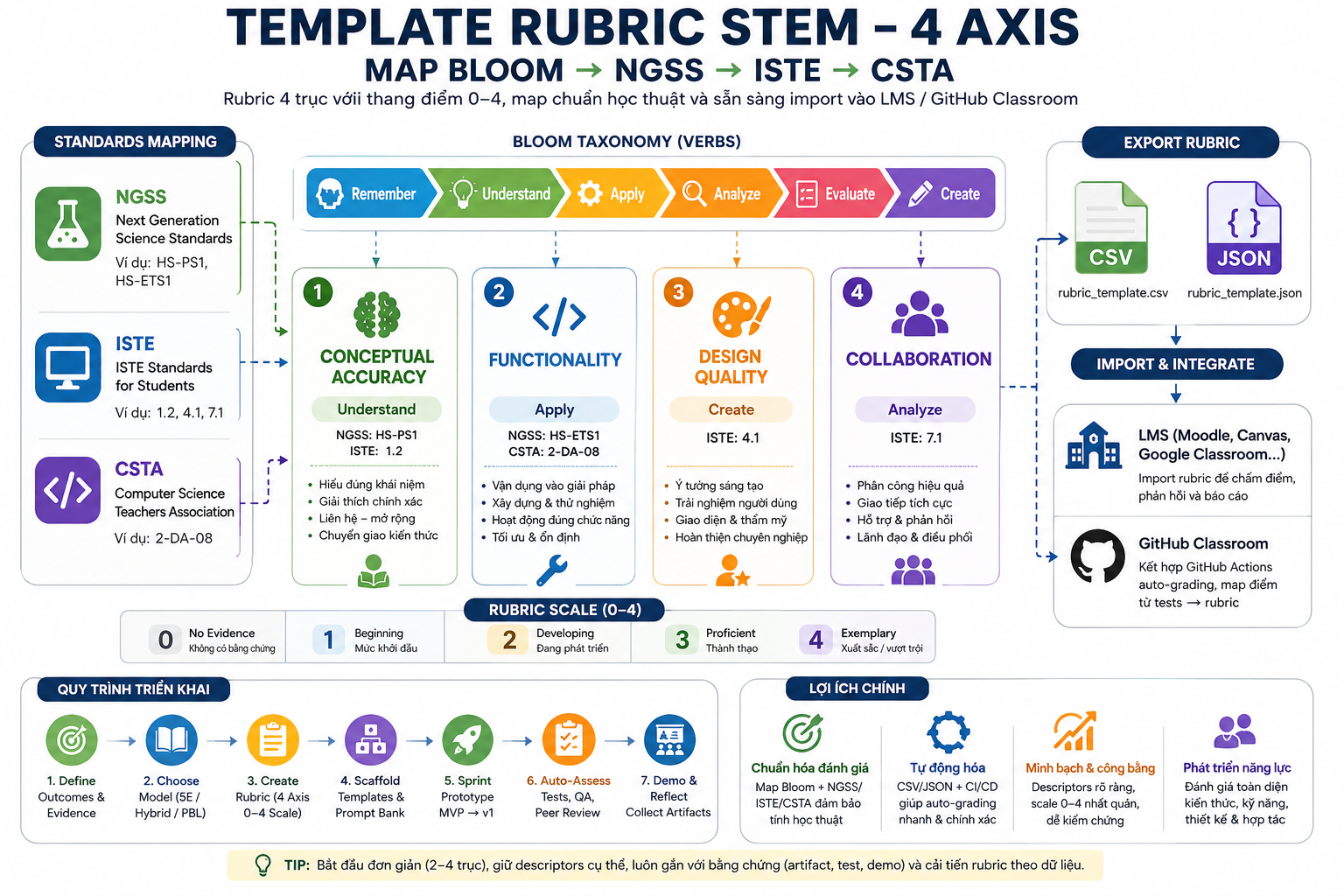
Template rubric STEM giúp map Bloom, NGSS, ISTE và CSTA vào hệ thống đánh giá có thể import trực tiếp vào LMS hoặc GitHub Classroom.
💡TL;DR / KEY TAKEAWAYS
Ý chính 1: Cung cấp template rubric 4 trục (Conceptual, Functionality, Design, Collaboration) với descriptors 0–4 đã map trực tiếp sang Bloom verbs và tiêu chí NGSS/ISTE/CSTA.
Ý chính 2: Bao gồm mẫu CSV/JSON ready-to-import và hướng dẫn cụ thể để tích hợp vào LMS hoặc GitHub Classroom, hỗ trợ auto-grading và peer review.
Ý chính 3: Workflow triển khai rõ ràng (Define outcomes → Choose model → Create rubric → Scaffold → Sprint → Auto-assess → Demo) giúp chuyển từ learning outcomes đến artifacts có thể chấm điểm tự động.
1. Góc Nhìn Thực Chiến
Rubric là cầu nối giữa learning outcomes và đánh giá có thể hành động. Trong lớp STEM, giáo viên cần một template có thể:
đảm bảo tính học thuật (map sang Bloom/NGSS/ISTE/CSTA),
hỗ trợ chấm điểm ổn định (descriptors cụ thể, scale 0–4),
tái sử dụng và tự động hóa (CSV/JSON, import vào LMS/GitHub Classroom).
Thách thức thực tế thường gặp là rubric thiếu mapping chuẩn dẫn đến đánh giá cảm tính; template này xử lý bằng axis rõ ràng và evidence-based descriptors.
Thống kê nội bộ: triển khai hybrid 5E→PBL với rubric tương tự giảm tỷ lệ dự án dở dang từ ~40% xuống ~12% trong chuỗi 6–8 tuần (Dữ liệu nội bộ từ chương trình triển khai thực tế).
2. Cơ Sở Học Thuật & Bản Chất Công Nghệ
Bloom taxonomy: dùng verb cụ thể (Remember, Understand, Apply, Analyze, Evaluate, Create) để định nghĩa mức hành vi học tập. Khi viết outcome, luôn chỉ rõ verb Bloom.
NGSS / ISTE / CSTA: mỗi tiêu chí tiêu chuẩn được ghép vào axis phù hợp (ví dụ: NGSS HS‑ETS1 cho thiết kế kỹ thuật; CSTA 2-DA-08 cho phát triển dữ liệu/code).
Công nghệ tích hợp: GitHub Classroom cho quản lý repo và auto-grading; LMS/H5P cho artifacts tương tác; GitHub Actions cho báo cáo tự động; Vercel/Loom cho demo.
[VỊ TRÍ CHÈN ẢNH X - Copy thông tin từ mục Quản lý hình ảnh vào đây]
3. Quy Trình Thực Hành Triển Khai (Workflow)
Hành động: Define 3 measurable learning outcomes; cho mỗi outcome xác định evidence (artifact, test, demo).
Công cụ: Bloom verbs guide, NGSS mapping portal.
Gotchas: Outcome mơ hồ; thiếu bằng chứng kiểm tra.
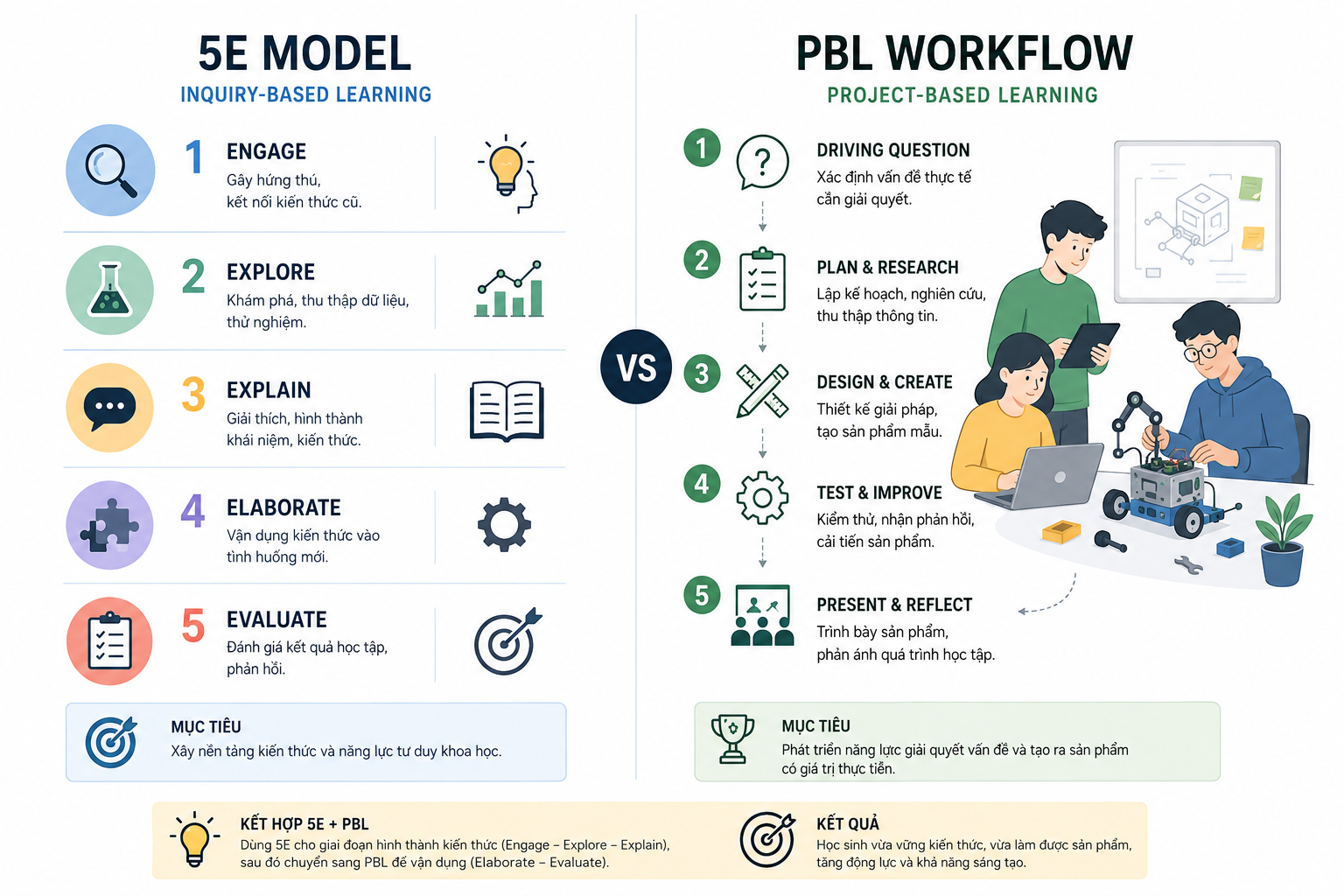
Hành động: Decide instructional model (5E / Hybrid / PBL) dựa trên tỷ lệ outcomes conceptual vs applied.
Công cụ: 5E sequence checklist.
Gotchas: chuyển sang PBL quá sớm, bỏ phase Explain.
Hành động: Create rubric mapped to Bloom + NGSS/ISTE/CSTA.
Công cụ: Template rubrics (CSV/JSON).
Gotchas: descriptors chung chung, scale không dẫn tới hành động.
Hành động: Scaffold with starter templates (code/CAD/prompt bank).
Công cụ: GitHub starter repo, CAD templates, LLM prompt bank.
Gotchas: prompts thiếu context; học sinh paste output without verification.
Hành động: Sprinted prototyping (MVP → v1 → polish).
Công cụ: Tinkercad/Wokwi/Onshape.
Gotchas: Expect full product in first sprint.
Hành động: Auto-assessment + QA (unit tests, sensor validation, peer review).
Công cụ: GitHub Actions autograder patterns, LMS rubrics.
Gotchas: Over-engineering CI cho lớp nhỏ.
Hành động: Public demo & reflection; collect artifacts and map back to LO.
Công cụ: Vercel, Loom.
Gotchas: demo thiếu user testing data.
4. Đúc Kết, Signature Insight & Nguồn Cảm Hứng
Signature insight — Rubric Complexity Matrix (tạo yếu tố độc quyền giúp quyết định cấu trúc rubric theo maturity của lớp):
Rubric Complexity Matrix
Classroom maturity: Beginner → Rubric strategy: 2-axis (Conceptual, Product), mục tiêu: clarity, minimal grading overhead.
Classroom maturity: Intermediate → Rubric strategy: 4-axis (Conceptual, Functionality, Design, Collaboration), mục tiêu: balance objectivity + qualitative review.
Classroom maturity: Advanced → Rubric strategy: 4-axis + auto-grading integrated (unit tests + peer review + CI pipeline), mục tiêu: scale, reproducibility, audit trail.
Lý do: ma trận giúp lãnh đạo chương trình quyết định ngay cấu hình rubric phù hợp với năng lực giáo viên và kỹ năng học sinh — tăng khả năng áp dụng và backlink potential.
[DẪN NHẬP FAQ NGẮN]
Dưới đây là những câu hỏi phổ biến nhất khi triển khai thực tế chủ đề này trong classroom hoặc workflow production.
Làm sao để map một learning outcome cụ thể vào rubric và tiêu chuẩn NGSS/ISTE/CSTA?
Tôi có thể import rubric vào LMS hoặc GitHub Classroom bằng cách nào?
Làm thế nào để tích hợp auto-grading mà không làm phức tạp hoá lớp học?
Tài nguyên tải về
rubric_template.csv
csv Criterion,Axis,BloomVerb,Standards,Level0,Level1,Level2,Level3,Level4,Weight Conceptual Accuracy,Conceptual,Understand,"NGSS:HS-PS1; ISTE:1.2",No evidence,Partial misconceptions,Basic correct explanation,Accurate with examples,Deep transfer/insight,0.3 Functionality,Functionality,Apply,"NGSS:HS-ETS1; CSTA:2-DA-08",Does not run,Incomplete MVP,Core function works with bugs,Robust function,Polished,0.3 Design Quality,Design,Create,"ISTE:4.1",No design,Minimal layout,Clear UX,Thoughtful design,Professional polish,0.2 Collaboration,Collaboration,Analyze,"ISTE:7.1",No collaboration,Unequal contribution,Some shared work,Effective teamwork,Leadership & facilitation,0.2
rubric_template.json
json { "title": "STEM Rubric Template - 4 Axis", "axes": [ { "name": "Conceptual Accuracy", "axis": "Conceptual", "bloom": "Understand", "standards": ["NGSS:HS-PS1","ISTE:1.2"], "weights": 0.3, "levels": { "0": "No evidence", "1": "Partial misconceptions", "2": "Basic correct explanation", "3": "Accurate with examples", "4": "Deep transfer/insight" } }, { "name": "Functionality", "axis": "Functionality", "bloom": "Apply", "standards": ["NGSS:HS-ETS1","CSTA:2-DA-08"], "weights": 0.3, "levels": { "0": "Does not run", "1": "Incomplete MVP", "2": "Core function works with bugs", "3": "Robust function", "4": "Polished" } }, { "name": "Design Quality", "axis": "Design", "bloom": "Create", "standards": ["ISTE:4.1"], "weights": 0.2, "levels": { "0": "No design", "1": "Minimal layout", "2": "Clear UX", "3": "Thoughtful design", "4": "Professional polish" } }, { "name": "Collaboration", "axis": "Collaboration", "bloom": "Analyze", "standards": ["ISTE:7.1"], "weights": 0.2, "levels": { "0": "No collaboration", "1": "Unequal contribution", "2": "Some shared work", "3": "Effective teamwork", "4": "Leadership & facilitation" } } ] }
GitHub Classroom example repo (recommendation): tạo repo kingdragonhub/stem-rubric-template và push 2 file trên + README với hướng dẫn import.
Hướng dẫn ngắn import:
LMS (ví dụ: Moodle): Upload rubric_template.csv via Gradebook → Import rubric (mapping columns to rubric fields). Nếu LMS yêu cầu JSON, dùng rubric_template.json.
GitHub Classroom: Add rubric_template.json vào assignment repo; configure GitHub Actions để chạy tests và xuất scores vào CSV mapping vào rubric levels.
Nguồn tham chiếu nghiên cứu (Citations):